BAKING · STASYA’S RECIPE
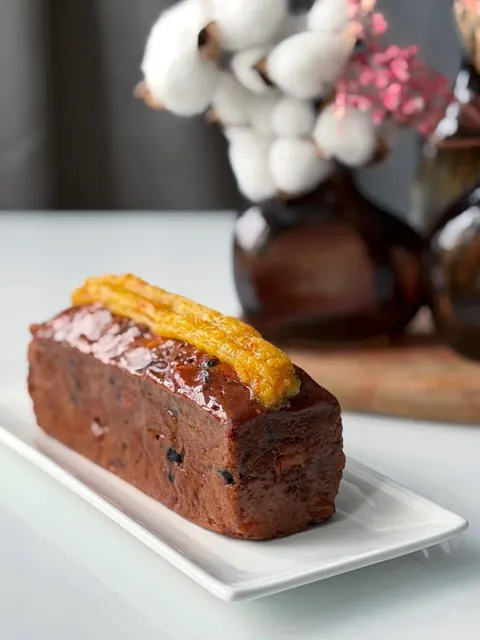
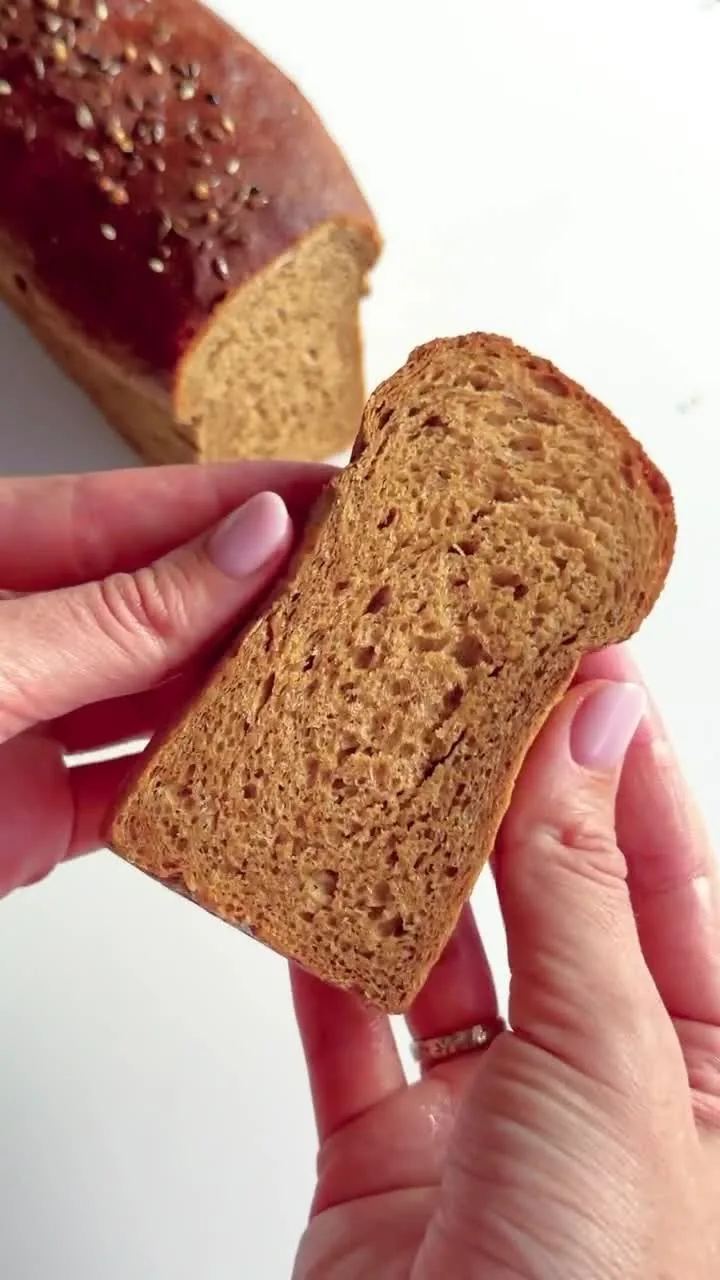
Borodinsky-style bread
Soft bread on a ready-made Borodino mixture with milk tangzhong and honey.
 Prepared and shared by
Stasya Varkalova
PLAN YOUR PREPARATION
Before you start
Read the whole recipe and prepare the ingredients. Allow for resting, chilling or setting separately from hands-on preparation. Components that need a long chill or time to stabilise can be prepared ahead, following the sequence in the recipe.
Recipe contentsJump to ingredients or a preparation stage
EVERYTHING AT HAND
Ingredients
Tangzhong
Main dough
Extras
Tick off ingredients as you prepare them. Your checkmarks stay in this browser.
STEP BY STEP
Method
Tangzhong
Mix 11 g flour and 53 g milk until completely smooth.
Heat, stirring constantly, to approximately 65°C until the mixture thickens to the consistency of a soft custard.
Do not boil.
Remove from heating, cover with cling film touching the surface and cool to approximately 25–30°C.
Kneading
Place in the mixer bowl: 112 g of Borodinsky mixture;
74 g wheat flour;
3 g yeast; the whole tangzhong;
74 g milk;
21 g water;
7 g honey.
Knead with a dough hook on low speed for 4-5 minutes.
Add 1.5 g of salt and continue kneading for about 2 minutes.
Then gradually, in 2-3 doses, introduce 15 g of soft butter.
After completely introducing the butter, knead for another 5–7 minutes.
Correct consistency
The dough should be: very soft; wet; slightly sticky; quite smooth; pliable.
It does not have to give a perfectly thin windowpane, because the Borodino mixture contains rye flour.
The main thing is not to add too much extra flour.
If after full kneading the dough feels clearly dense, you can add another 3-5 g of water, literally 1-2 g at a time. Do not add it all at once.
First fermentation
Transfer the dough to a lightly greased bowl and cover.
Leave at 25-27°C for approximately 60-75 minutes.
The guideline is an increase of approximately 1.5–1.7 times.
Do not wait for it to double in size.
Shaping
Lightly grease your hands and surface with vegetable oil.
Place the dough and carefully flatten it into a small rectangle.
Roll into a fairly tight roll, trying to stretch the surface without tearing the dough.
Pinch the seam well.
Place in a greased pan, seam side down.
Smooth the surface with a damp hand.
Before proofing / before baking
If you want coriander on top, lightly moisten the surface with water and add just a few grains.
Do not brush with egg, milk or butter before baking.
Proofing
Thaw at 27–29°C.
Approximately 45–60 minutes, but here it is better to look at the bread rather than at the clock.
For this pan, I would put it in the oven when the dough is about level with the edge of the pan, or at most 0.5-1 cm above.
This is especially important after the first experience: you don’t need to let it grow into a huge head even before the oven, because it has a good oven spring.
When lightly pressed with your finger, the dent should slowly return.
Baking
Preheat the oven well in advance.
175°C, top-bottom, no convection.
For a reduced bookmark, the guideline is 27–32 minutes.
But it is best to control with a probe:
Temperature in the center of the bread is 94–96°C.
As soon as it reaches this temperature, remove it. Do not keep for “another five minutes to be sure”: we need a soft and moist crumb.
If the top starts to darken too quickly, cover the top with foil towards the end.
After baking — important for softness
Immediately remove the bread from the pan.
While hot, very thinly grease the top and sides with 2-3 g of butter.
After 5-7 minutes, wrap in a clean towel.
Cool completely.
Once cooled completely, transfer to an airtight bag or container. Do not just leave it in a towel overnight — it will lose moisture.
Enjoy making it.
May this become one of your favourite recipes.